
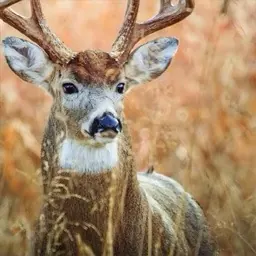
Deer Calls Guide
Deer Calls: Grunts, Bleats & Rattling
The only deer sounds you need: contact grunt, doe bleat, fawn bawl, and rattling. Learn what each means, when to play it, and how to practice with 1200+ calls in Hunting Calls Pro.
By Ferdous Mahmud Akash ·Sounds included in the app
- Buck grunt — contact and tending grunts for cruising bucks
- Doe bleat — estrus and contact bleats that pull bucks in
- Fawn bawl — distress sound for late season and predators
- Rattling — sparring sequences for pre-rut and rut
When to use each call
- Early season: soft doe bleats only. Bucks are quiet.
- Pre-rut: grunt + light rattle. Bucks spar and check does.
- Peak rut: grunt, bleat, and aggressive rattling. Call every 20 minutes.
- Late season: soft bleats and fawn bawls near food.
How to call without spooking deer
- Start quiet. You can get louder — you cannot take sound back.
- Call for 30 seconds, then wait 15–20 minutes silent.
- Face downwind and keep your loop on repeat low, not max volume.
- Practice in the app first: play the call, listen, then mimic timing.
Deer grunt caller: how to grunt like a buck
Deep dive: deer grunt calls and rut mating calls.
A deer grunt caller is a reed call that reproduces buck contact grunts — short, deep "urrp" notes. Blind-call every 20–30 minutes along funnels and scrape lines: two or three soft grunts, then silence. During the rut chase phase, add aggressive tending grunts aimed at a visible buck to challenge him in. Too much volume is the classic failure; a real buck 100 yards away sounds quiet.
Deer bleat caller and the mating sequence
A deer bleat caller makes doe and estrus bleats — long, nasal "meeeh" cries that peak during the rut. The full deer mating call sequence runs: doe bleat, 30 seconds of silence, buck grunt, silence, then light rattling. Estrus bleats say a hot doe is here; tending grunts say a rival is with her. Together they pull cruising bucks off their line like nothing else in November.
Best buck grunt call setup
The best buck grunt call — the core of any deer call app setup and the complete deer sounds and calls system — is the one you can run hands-free while rattling and watching: an app looping soft grunts on a Bluetooth speaker at the scrape line, grunt tube around your neck for live answers. Hunting Calls Pro carries grunts, bleats, snorts and fawn bawls offline — pair looping playback with live calling and you cover both the waiting game and the moment a buck appears.
What deer sounds work in early season?
Soft contact grunts and feeding sounds. Save aggressive grunts, bleats and rattling for pre-rut onward — early bucks spook at rut intensity.
Do deer calls work for mule deer?
Yes — fawn bawls and doe bleats especially, in open country where deer hear further. Mule deer respond to the same grunt-and-bleat language with slightly longer pauses between sequences.
When should I use a grunt call?
Pre-rut through rut. Short contact grunts when you see a cruising buck out of range.
What is the best deer call for beginners?
Doe bleat. It works all season, sounds natural, and rarely spooks deer.
Does rattling work?
Yes in pre-rut and rut. Rattle 30–60 seconds, then go quiet and watch downwind.