
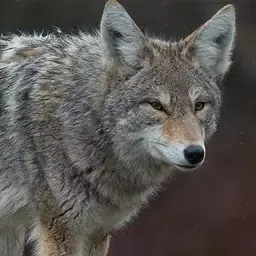
Predator Calls Guide
Predator Calls: Coyote, Fox & Bobcat
Definition: predator calls imitate prey in distress or rival predators to pull coyotes, foxes and bobcats into range. One distress sound — played right — outproduces a vest full of hand calls.
By Ferdous Mahmud Akash · · 6 min readWhat works on each predator
- Coyote: lone howl to locate, rabbit distress to kill. Winter pairs answer challenge howls.
- Red & gray fox: high-pitched bird distress and mouse squeaks beat loud rabbit. Keep volume low.
- Bobcat: slow, quiet bird distress with long pauses. Cats slip in silent — watch, do not just listen.
Which distress sound should you start with?
Rabbit distress. It is the most universal predator sound in North America: coyotes run it, foxes cannot resist it, and bobcats stalk it. In Hunting Calls Pro it loops hands-free so your hands stay on the rifle. Fawn bawls peak in summer; bird distress shines for fox and cats in thick cover.
The 20-minute stand, step by step
- Setup crosswind. Predators circle downwind. Put the speaker 20 yards upwind of you.
- Locate (0–3 min). Two lone howls, then 3 minutes silent. Glass constantly.
- Feed (3–13 min). Loop rabbit distress at 30–40% volume. Pulse it: 2 minutes on, 1 minute off.
- Panic (13–18 min). Switch to frantic distress — higher pitch, faster. This triggers chargers.
- Move. Nothing by minute 20? Go half a mile. Fresh ears kill more predators than long sits.
Day vs night calling
- Day: howls at dawn/dusk, distress midday near bedding cover.
- Night: lower volume, longer pauses. Red lights, scan continuously — eyes give them away.
- Wind: always face crosswind. A coyote that smells you is a coyote you educate.
Common mistakes that educate predators
- Max volume on calm nights — start at one-third.
- Same sound every stand — rotate rabbit, bird, and fawn weekly.
- Moving at minute 8 — most doubles arrive minutes 10–16.
- Skyline setups — sit below ridges with brush behind you.
What is in the app
Lone and challenge howls, rabbit and bird distress, fawn bawls — 1200+ sounds total with loop and volume built for stands. Free daily allowance; Pro unlocks unlimited looping.
Best predator calls, ranked by situation
Full ranking: best predator calls — every sound rated.
- Open country coyotes: lone howl opener, jackrabbit distress closer
- Night stands: electronic predator call looping cottontail at one-third volume
- Bobcat thickets: baby cottontail or bird distress, soft, 25–30 minutes
- Red fox edges: rodent squeaks and gray-fox pup distress
- Mountain lion country: fawn bawls and elk-calf cries near kill zones, where legal
Electronic predator calls and digital predator calls
Electronic predator calls — handheld e-calls, Bluetooth speakers, and digital predator call apps — win by placing sound away from the shooter and looping it hands-free. A digital predator call on your phone costs nothing extra, updates with new sounds, and runs through the same field speaker as a $300 e-call. Mouth calls still earn a neck lanyard for locating and backup. Full breakdown: electronic vs mouth calls.
Mountain lion sound on the stand
A mountain lion sound — that chilling scream, plus chirps and growls — works two ways: where lions are legal game, fawn bawls call them in; everywhere else, sudden deer and elk alarm behavior tells you a lion is already working the drainage. If deer start blowing for no visible reason, slow down and glass — you may be hunting inside a lion's kitchen.
What is the best all-around predator call?
Rabbit distress on an electronic call. It pulls coyotes, fox and bobcats in every region and season — start there, specialize later.
How long should a predator stand last?
Coyotes and fox: 15–20 minutes. Bobcats: 25–30. Mountain lions: up to an hour. Silence between sequences matters as much as sound.