
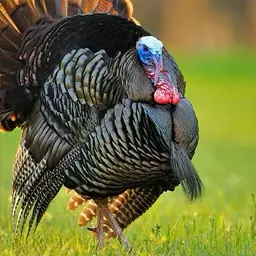
Turkey Calls Guide
Turkey Calls: Yelps, Clucks & Purrs
Talk turkey with confidence. Hen yelps to locate, clucks and purrs to finish, gobbles to locate at dawn — practice them all in Hunting Calls Pro.
By Ferdous Mahmud Akash ·Sounds included in the app
- Hen yelp — plain yelps and excited series
- Cluck & purr — soft finishing sounds
- Cutting — aggressive lost-hen sequence
- Gobble — dawn locator, use sparingly
Spring vs fall
- Spring: yelp lightly, then shut up. Let the tom hunt you.
- Fall: scatter-and-call. Ke Ke runs and assembly yelps regroup birds.
- Midday: cluck and purr near dusting and strut zones.
Fall turkeys play by different rules
Spring is about lonely hens; fall is about the flock. Find feeding flocks, scatter them with a rushed approach, then sit and call them back together: ke-ke runs for young birds, assembly yelps for hens, gobbles only to shock-locate toms at dawn. Fall birds regroup fast and come running — often inside 15 minutes. Same legal caution as spring: confirm fall season dates and bag rules in your state before you scatter. A single feeding hen decoy seals the deal — fall birds expect to see the flock they hear. Cadence matters more than tone: space yelps like a real hen walking and feeding, three to five notes then silence, and resist calling over an answering bird — let him close the last fifty yards hunting you.
Turkey hen call: the sound that kills toms
Deep dive: turkey hen calls — every yelp, cutt and cluck.
A turkey hen call is a plain, 3-to-5-note yelp — nasal, rhythmic, unhurried. Ninety percent of spring calling should be exactly this: soft tree yelps at dawn, then quiet plain yelps every 15–20 minutes. Excited cutting (fast, loud, uneven yelps) mimics a lost, fired-up hen and can drag a hung-up tom those last 60 yards. Save gobbles for locating at first light; hen sounds close the deal without educating every bird on the ridge.
Best turkey call app setup
The best turkey call app puts every turkey call sound — yelps, clucks, purrs, cutting, gobbles — one tap away with no fumbling through strikers and diaphragms. Hunting Calls Pro loops soft yelp sequences hands-free while you sit motionless, and works offline in bottomland with zero bars. Study the sounds at home, then play them sparingly in the woods: the app teaches, restraint kills.
Hen or gobbler — what should I sound like?
A hen, almost always. Toms come to hens; gobbler sounds (gobbles, drum-and-strut) mostly attract dominant toms looking for a fight and can spook subordinate birds silent.
What are the basic turkey call sounds?
Yelp, cluck, purr, cutt, cackle and gobble. Learn the plain yelp first — it locates and finishes birds in both spring and fall.
Best spring call?
Plain hen yelp. Soft, 3–5 notes, every 15–20 minutes.
Should I gobble?
Only to locate at dawn. Hen sounds kill more toms safely.
Why do turkeys hang up?
Overcalling. When a tom answers, go quiet and let him close.