
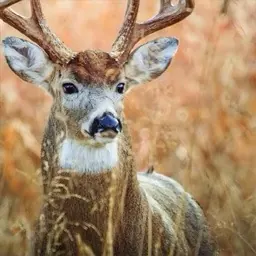
Deer Calls Guide
Doe Estrus Bleat: Sound Like a Hot Doe, Pull Bucks
The last weekend of October is when whitetail woods change: bucks abandon feeding patterns and start cruising for the first hot does. The sound they are listening for is the doe estrus bleat — a long, nasal, insistent cry that says a doe is ready to breed right now. One well-timed bleat can drag a cruising buck off his line at 100 yards; one sloppy calling session can educate him for the season. This guide breaks down exactly what the estrus bleat sounds like, how it differs from a regular doe bleat, the two-bleat-plus-grunt sequence that closes the deal, and when to start calling in late October on both sides of the border.
By Ferdous Mahmud Akash ·Estrus sounds in the app
- Estrus bleat — long breeding cry of a hot doe
- Doe bleat — standard social bleat, all season
- Tending grunt — buck guarding a doe
- Fawn bawl — distress that pulls does (and trailing bucks)
Estrus bleat vs regular doe bleat
A standard doe bleat is short, soft, and conversational — roughly one second, used between feeding deer all season. The estrus bleat is a different animal: 2–3 seconds long, louder, higher-pitched, and repeated with urgency every few minutes. Think of the social bleat as a contact call and the estrus bleat as an announcement. Bucks learn the difference by their second autumn, which is why blowing an estrus cry in early October usually earns silence — save it for the seeking window, when a hot-doe story is believable. Missouri’s deer biologists describe this same seasonal shift in how deer communicate as the rut approaches (Missouri Department of Conservation).
The 2-bleat grunt sequence
Run it exactly like this: one 2–3 second estrus bleat, 30–60 seconds of silence, a second bleat, then a buck tending grunt 10 seconds later. Then put the call down for a full 2–5 minutes. The story you just told is a hot doe with a rival buck already on her — the one scene a cruising buck cannot ignore. Looping the spacing by hand is where most hunters fail, so run the sequence hands-free in the app while your hands stay on the weapon and your eyes stay downwind. One cycle per setup; a second cycle only if a buck hangs up out of range.
Late-October window: when to start
- Seek (late October): first estrus bleats — bucks are cruising and callable. The October 24 weekend is go-time.
- Chase (early–mid November): peak response — estrus bleats with tending grunts, call hardest now.
- Breed (mid November): quiet down; locked-down bucks ignore calls. Hunt doe bedding instead.
- Second rut (~28 days later): unbred does cycle again — estrus bleats earn a second season.
Pressured bucks and legal notes
Heavily hunted bucks learn that loud calling means humans, so cut volume by half and double every silence on pressured ground — a single soft estrus bleat slips subordinate bucks in silently where aggressive sequences would flare them. Midday sits (10am–2pm) catch mature bucks cruising while other hunters leave for lunch. Before you call, confirm your dates: check your US state regulations for archery and firearms openers, and in Canada confirm Ontario and Québec season dates, which differ from US states and from each other. Full grunt pairings: deer grunt calls; the complete system: deer calls guide; the bigger rut picture: deer rut calls.
What does a doe estrus bleat sound like?
A long 2–3 second nasal cry — louder, higher, and more insistent than a regular doe bleat. A hot doe repeats it every few minutes, and each cry tells nearby bucks she is ready to breed.
How often should I use an estrus bleat call?
One 2–3 second bleat, 30–60 seconds of silence, then a second bleat followed by a buck tending grunt. Then go quiet for 2–5 minutes. Run the cycle at most twice per morning sit — overcalling educates bucks fast.
When should I start using estrus bleats?
Late October, as bucks shift from feeding patterns to seeking — the October 24 weekend is prime in most northern US states, and the same seeking window in Ontario and Quebec. Peak response runs through the early-November chase; always match calling to your local open season dates.
Should I bleat at a buck I can see?
During the seeking and chase phases, yes — a single estrus bleat usually stops or turns him. Outside peak rut, use a soft standard doe bleat instead: it stops a walking buck for the shot without the urgency that can spook wary deer.
Can I run the sequence hands-free?
Yes — the app loops the estrus bleat plus tending-grunt combo with realistic spacing, so your hands stay on the bow or firearm. Practice the 2-bleat rhythm at home, then let the loop work while you watch downwind.